


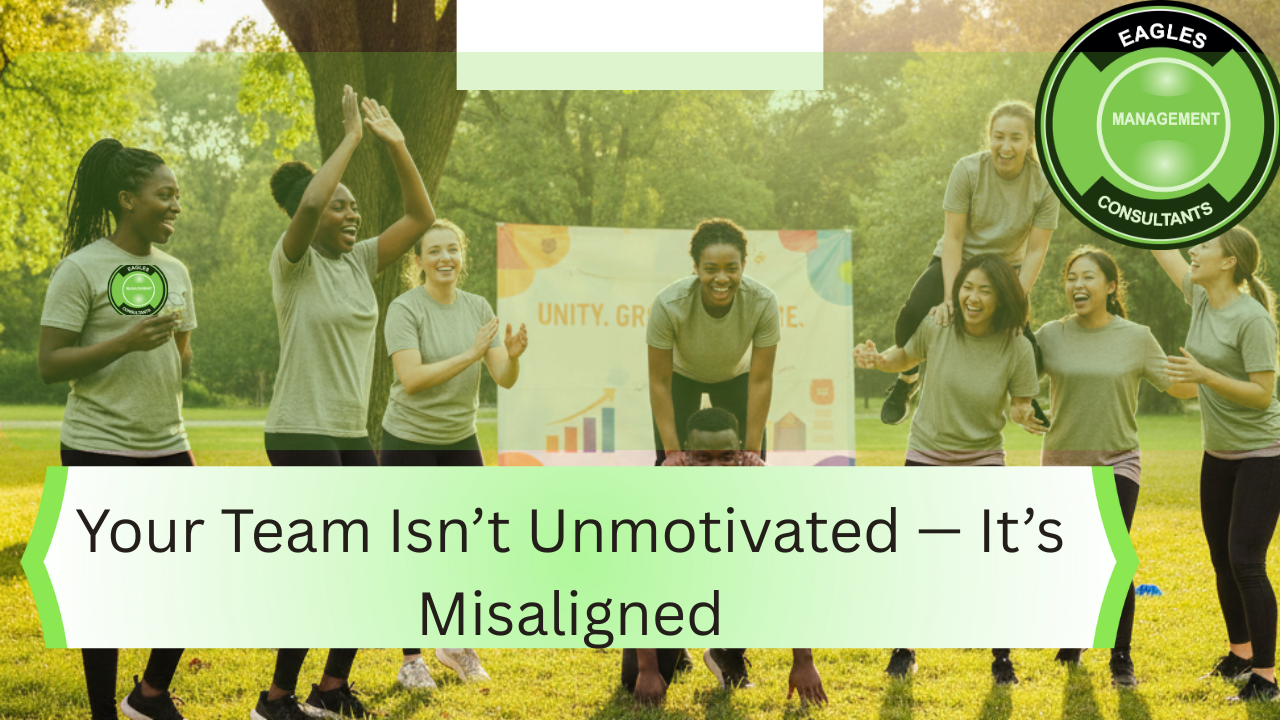
Your Team Isn’t Unmotivated — It’s Misaligned | Strategic Leadership Insights by Eagles Consultants
The Real Reason Teams Struggle
Many leaders quickly assume that poor performance comes from a lack of motivation. However, in most organizations, motivation is not the core issue. Instead, misalignment quietly drains energy, focus, and commitment from even the most dedicated teams. When people are unclear about direction, priorities, or expectations, their effort loses impact. As a result, teams appear disengaged while still working hard. At Eagles Consultants, we consistently find that alignment, not motivation, drives sustainable performance.
What Team Misalignment Really Means
Team misalignment happens when strategy, roles, and communication fail to move in the same direction. Although leadership may believe goals are clear, employees often receive mixed signals. Moreover, departments pursue competing priorities that weaken overall progress. Consequently, individuals focus on tasks instead of outcomes. Over time, confusion replaces confidence, and productivity declines despite strong intent.
Why Hardworking Teams Still Underperform
Many teams put in long hours yet deliver disappointing results. This happens because effort without alignment creates noise, not progress. When goals shift frequently or remain unclear, people struggle to prioritize effectively. Additionally, unclear decision-making authority slows execution. As a result, teams spend more time reacting than creating value. Eventually, frustration grows, and momentum fades.
Common Signs Your Team Is Misaligned
Misalignment often shows up before leaders recognize it. Missed deadlines, repeated errors, and excessive meetings usually signal unclear ownership. Likewise, low initiative may reflect confusion rather than laziness. Furthermore, constant firefighting suggests that teams lack stable direction. When these patterns persist, leaders should examine alignment instead of questioning commitment. To book training sessions or find top team-building venues, visit Eagles Consultants.

The Hidden Cost of Misalignment
Misalignment affects more than performance. It quietly damages trust, morale, and organizational culture. When priorities change without explanation, employees feel disconnected. Moreover, high performers become discouraged when effort goes unnoticed. Over time, collaboration weakens, engagement drops, and turnover increases. Therefore, addressing misalignment early protects both results and people.
Leadership’s Responsibility in Driving Alignment
Alignment begins with leadership clarity and consistency. Leaders must communicate priorities repeatedly and reinforce them through action. However, words lose power when decisions send mixed messages. Additionally, unclear accountability creates gaps in execution. When leaders align strategy, behavior, and expectations, teams follow with confidence and focus.
Clarifying Vision and Strategic Direction
A clear vision gives teams a sense of purpose and direction. When strategy translates into simple, actionable goals, employees understand how their work matters. As a result, decision-making improves at every level. Furthermore, clarity reduces wasted effort and unnecessary conflict. Strong alignment starts with a vision people can act on daily.
Check out our team-building hotels.
Nairobi Team Building Hotels
Naivasha Team Building Hotels
Mombasa Team Building Hotels
Sagana Team Building Hotels
Kisumu Team Building Hotels
Nakuru Team Building Hotels
Nanyuki Team Building Hotels
Aligning Roles and Responsibilities
Every role should clearly support organizational goals. However, outdated job structures often prevent this connection. Leaders must ensure that responsibilities match current priorities. Additionally, clear ownership eliminates duplication and delays. When people know what they own, accountability increases naturally, and execution becomes faster.
Improving Communication Across Teams
Effective communication strengthens alignment across the organization. Information should flow both upward and downward. Moreover, regular feedback helps teams adjust quickly. Transparency builds trust and reinforces shared priorities. When communication improves, teams spend less time guessing and more time delivering results.
Systems and Processes That Reinforce Alignment
Organizational systems must support strategic goals. Unfortunately, many systems reward behaviors that conflict with stated priorities. Therefore, performance metrics and incentives should reflect what truly matters. Simple, aligned processes reduce confusion and improve consistency. As a result, teams execute strategy more effectively.
The Eagles Consultants’ Approach to Alignment
At Eagles Consultants, alignment is the foundation of performance improvement. We help leaders clarify strategy, align leadership teams, and create practical execution frameworks. Rather than treating symptoms, we address root causes. Consequently, organizations regain focus, rebuild trust, and achieve measurable results.
Conclusion: Alignment Unlocks Motivation Naturally
Motivation grows naturally when people have clarity and purpose. Instead of pushing teams harder, leaders should focus on alignment. When direction, roles, and systems work together, performance improves without burnout. At Eagles Consultants, we believe aligned teams are not only more productive but also more resilient and engaged. Eagles Consultants connects organizations with the best team-building hotels. The platform simplifies planning by offering expert guidance and verified venues. As a result, clients enjoy seamless coordination. Visit Eagles Consultants for expert guidance and tailor-made packages! EaglesConsultants continues to lead the way with exceptional training programs and trusted hotel partnerships.
