


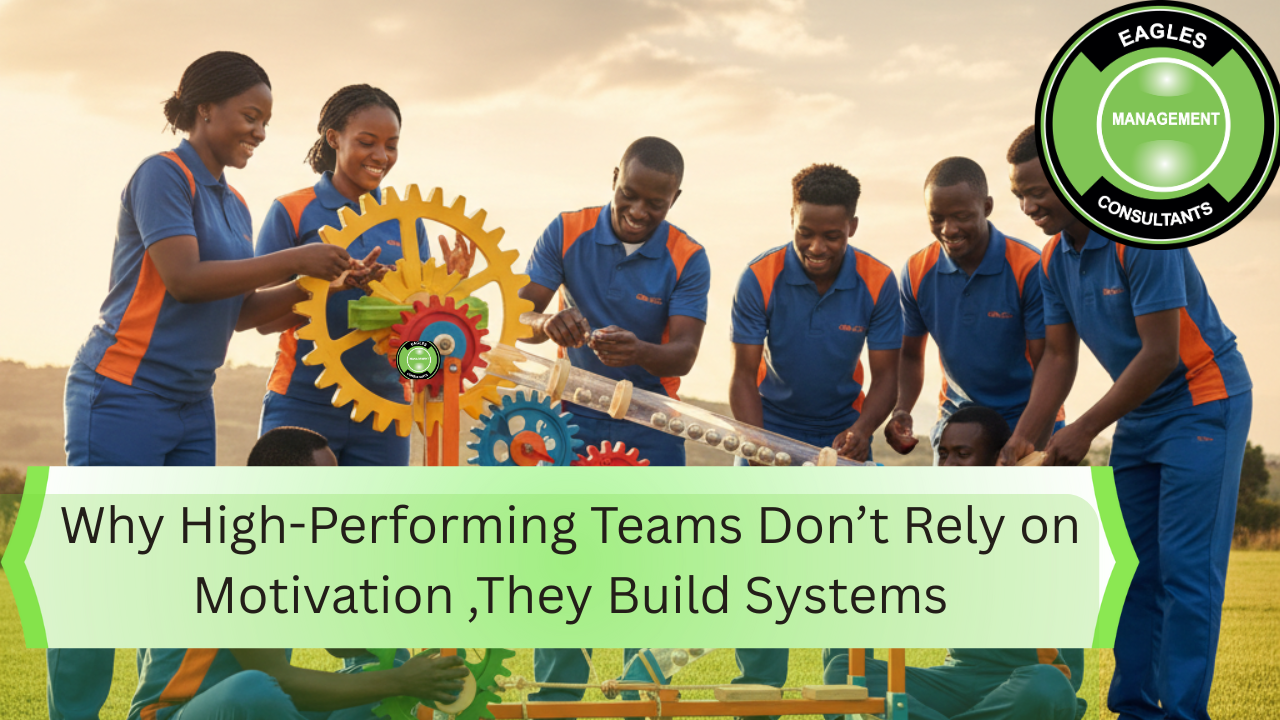
Why High-Performing Teams Don’t Rely on Motivation — They Build Systems
Many organizations chase motivation as if it were the ultimate solution. Leaders organize talks, incentives, and pep sessions, hoping energy will last. However, motivation is temporary. It rises and falls with mood, pressure, and personal circumstances. High-performing teams understand this reality clearly. Instead of depending on motivation, they build strong systems. For organizations working with Eagles Consultant, this shift is essential for sustainable performance.
The Problem with Relying on Motivation Alone
Motivation is unreliable by nature. Some days, people feel energized. Other days, they feel exhausted. When performance depends on motivation, results become inconsistent. Teams perform well only when they feel inspired. Consequently, deadlines slip and quality drops during low-energy periods. High-performing teams avoid this risk by designing systems that work even on hard days.
Systems Create Consistency Where Motivation Fails
Systems provide structure and predictability. They define how work gets done regardless of individual feelings. Clear workflows guide actions automatically. As a result, progress continues even when motivation is low. Systems remove guesswork and reduce decision fatigue. Therefore, teams spend less energy deciding what to do and more energy doing it well. To book training sessions or find top team-building venues, visit Eagles Consultants.
Clarity of Roles Drives Reliable Performance
Strong systems begin with role clarity. When responsibilities are clear, confusion disappears. Team members know what is expected of them daily. This clarity reduces friction and overlap. Consequently, accountability becomes natural rather than forced. High-performing teams do not wait to feel motivated to act. They follow defined roles that support execution.
Processes Turn Goals into Daily Actions
Goals alone do not drive results. Systems translate goals into repeatable actions. Well-designed processes break big objectives into manageable steps. Therefore, progress becomes measurable and visible. Teams stay aligned because processes guide priorities. Over time, consistent execution builds momentum. Motivation becomes a byproduct, not a requirement.
Habits Outperform Bursts of Inspiration
Motivation creates short bursts of effort. Habits create lasting impact. High-performing teams focus on building productive habits through systems. Daily check-ins, regular reviews, and standardized routines reinforce discipline. As a result, performance becomes automatic. Teams no longer depend on emotional highs to deliver results.
Feedback Systems Sustain Improvement 
Without systems, feedback becomes irregular. High-performing teams embed feedback into their workflow. Regular reviews highlight what works and what needs adjustment. Consequently, learning becomes continuous. Teams improve steadily instead of reacting to crises. Feedback systems replace blame with progress-focused conversations.
Check out our team-building hotels.
Reducing Burnout Through Smart Systems
Motivation-driven cultures often lead to burnout. People push hard until energy runs out. Systems-driven teams work sustainably. Workloads are distributed fairly. Expectations are realistic and transparent. Therefore, stress reduces, and engagement increases. Teams remain productive without sacrificing well-being.
Leadership Shifts from Inspiring to Enabling
In high-performing teams, leaders do not act as constant motivators. Instead, they become system designers. They focus on removing obstacles and improving workflows. This approach empowers teams to perform independently. Consequently, leaders spend less time pushing and more time guiding strategically.
Why Systems Build Trust and Accountability
Systems make performance visible. When everyone follows the same processes, fairness increases. Accountability feels objective rather than personal. Team members trust the system because expectations are clear. As a result, conflict reduces and collaboration improves. Trust grows through consistency, not motivational speeches.
Building Systems That Actually Work
Effective systems are simple and adaptable. They focus on outcomes, not bureaucracy. High-performing teams review systems regularly and refine them. This flexibility ensures relevance as conditions change. Therefore, systems support growth instead of restricting it.
Conclusion: Systems Are the Real Competitive Advantage
Motivation will always fluctuate. Systems endure. High-performing teams succeed because they design environments that support action every day. Clear roles, strong processes, and feedback loops replace emotional dependency with discipline. For organizations seeking lasting performance, the lesson is clear. Stop chasing motivation. Start building systems that work consistently. Eagles Consultants connects organizations with the best team-building hotels. The platform simplifies planning by offering expert guidance and verified venues. As a result, clients enjoy seamless coordination. Visit Eagles Consultants for expert guidance and tailor-made packages! EaglesConsultants continues to lead the way with exceptional training programs and trusted hotel partnerships.
